Prompt Engineering for Code Research: 6 Production Patterns
>Master prompt engineering patterns for software architecture, code research, and system design with copy-paste templates, constraints, and evaluation methods.
🎧 Listen — ~11 min
Audio summary not available yet

When senior engineers use large language models (LLMs) to investigate technical architectures, evaluate open-source dependencies, or refactor complex subsystems, naive prompts like "Compare Redis and Memcached" or "Refactor this module" yield shallow, textbook-level summaries. High-leverage code research and system design require structured prompt engineering patterns that ground the model in your production constraints, enforce trade-off discovery, and prevent speculative hallucinations.
Production prompt design turns the model from an unreliable code generator into a disciplined technical research partner. Below is an engineering reference and tested copy-paste prompt library for code research, dependency auditing, and system design.
Key takeaways
- The Context-Goal-Constraint-Output (CGCO) Formula: High-yield coding prompts explicitly separate context (tech stack, throughput, operational boundaries), goal (the design objective), constraints (banned patterns, latency budgets, licensing), and structured output formatting.
- Grounding via Negative Constraints: Models default to overly optimistic architectural recommendations unless explicitly constrained to expose failure modes, operational burdens, and licensing liabilities.
- Separation of Design and Implementation: Never ask an agent to research an architecture and output code in the same prompt pass. Require architectural trade-off evaluation first, followed by interface contract definition.
- Integration with Agent Tooling: Incorporate context markers, file references, and verification gates compatible with modern workflows, bridging the gap between local tools and coding models.
Tested Prompt Engineering Library for Code Research and Design
Each prompt below includes structural placeholders in [UPPERCASE_BRACKETS], a "Best for" operational scenario, and actionable tips for testing against state-of-the-art models.
1. The Architectural Trade-Off Analysis Pattern
This pattern forces the LLM to abandon generic pros/cons lists and pit two competing technical designs against your specific production bottlenecks.
1You are a principal systems architect reviewing a design decision for a high-concurrency production service.
2
3### System Context
4- Primary Stack: [e.g., Rust 1.82, Actix-Web, PostgreSQL 16]
5- Throughput / Load: [e.g., 25,000 requests/sec, 99th percentile latency budget < 15ms]
6- Target Infrastructure: [e.g., Kubernetes on AWS c7g.4xlarge nodes, EBS gp3 volumes]
7- Core Problem: [e.g., Evaluating in-process LRU cache with synchronization vs. an external Valkey cluster for tenant session data]
8
9### Objective
10Provide a rigorous technical trade-off evaluation comparing [OPTION A] and [OPTION B].
11
12### Non-Negotiable Constraints
131. Do not provide high-level introductory descriptions of what [OPTION A] or [OPTION B] are.
142. Evaluate specifically against: memory overhead per 1M keys, cache invalidation complexity, network round-trip penalty, and blast radius during an ungraceful node crash.
153. Identify at least two failure modes or pathological edge cases for each option.
16
17### Required Output Format
181. **Decision Matrix Table**: Columns: [Criterion, Option A, Option B, Operational Impact].
192. **Failure Analysis**: Concrete failure scenarios and cascading failure risk for each option under a 5x traffic spike.
203. **Architectural Recommendation**: A definitive recommendation based on the constraints above, including the criteria that would cause you to reverse this decision.- Best for: Evaluating database engines, messaging queues, or caching layers before writing RFCs.
- Troubleshooting tip: If the model provides generic summaries, add the negative constraint: "Penalty rule: Deduct credibility if you define basic terms like 'latency' or 'horizontal scaling'."
2. Dependency Audit and Subsystem Feasibility Pattern
When evaluating third-party libraries, frameworks, or open-source tools, models frequently hallucinate API stability or overlook licensing and maintenance liabilities. This pattern interrogates the dependency thoroughly.
1You are an engineering lead auditing an open-source dependency for inclusion into an enterprise codebase.
2
3### Library Under Evaluation
4- Package Name & Ecosystem: [e.g., orjson in Python, or tokio-util in Rust]
5- Target Repository Tech Stack: [e.g., Python 3.12, FastAPI, Asyncpg]
6- Intended Use Case: [e.g., High-throughput serializing of telemetry payloads before Kafka ingestion]
7
8### Audit Scope & Strict Verification
9Analyze the operational viability of this dependency across four dimensions:
101. **Runtime Performance & Memory**: Does it allocate dynamically on hot paths? Are there C-extensions, FFI boundaries, or memory leaks documented in its issue tracker?
112. **Concurrency & Thread Safety**: Behavior in multi-threaded vs. async event loops. Are there blocking operations or GIL considerations?
123. **Supply Chain & Maintenance**: License compatibility ([e.g., Apache 2.0 / MIT required, GPL strictly prohibited]), release cadence, and common maintenance pitfalls.
134. **Fallback & Escape Hatch**: If this package is abandoned, what is the migration complexity to a standard library or alternative?
14
15### Output Schema
16Provide a markdown-formatted technical audit document containing:
17- **Feasibility Scorecard** (Grade 1-5 across: Performance, Safety, Maintainability, Migration Cost)
18- **Detailed Findings** for each audit scope dimension
19- **Interface Proof of Concept**: Minimal idiomatic code snippet illustrating clean encapsulation behind an adapter pattern to isolate the dependency.- Best for: Vetting GitHub open-source dependencies and verifying licensing or concurrency stability, complementing workflows like auditing open-weight models and software components.
- Troubleshooting tip: Instruct the model to cite standard library alternatives to check if adopting a third-party dependency is truly justified.
3. API Contract and Data Boundary Design Pattern
Before generating code, senior developers specify interface boundaries. This pattern forces the model to define typed, defensive contracts that handle degradation gracefully.
1You are an API design specialist designing a clean boundary interface between microservices.
2
3### Context
4- Domain: [e.g., Payment Reconciliation Engine communicating with external Settlement Webhooks]
5- Languages / Frameworks: [e.g., Go 1.23, gRPC / Protobuf v3, and REST/JSON ingress]
6- Failure Tolerance: [e.g., Idempotent retries required, webhook delivery can arrive out of order]
7
8### Design Goal
9Create a deterministic data contract and client interface that prevents state corruption and handles network timeouts safely.
10
11### Technical Requirements
121. Design full typed schema definitions ([e.g., Protobuf definitions or TypeScript/Go types]).
132. Every payload must incorporate idempotency keys, deterministic timestamping (RFC 3339 UTC), and strict validation constraints.
143. Explicitly define an Error Contract containing: Machine-readable error codes, retryable flags (boolean), and debugging trace contexts.
15
16### Output Structure
171. **Schema Definition**: Copy-paste ready schema definitions.
182. **State Transition Diagram (Text-based)**: Valid lifecycle states of a request (e.g., `PENDING -> PROCESSING -> RECONCILED / FAILED`).
193. **Edge Case Matrix**: Table detailing: [Edge Case, Contract Handling Mechanism, Failure Fallback].- Best for: Designing REST schemas, gRPC protobufs, and database boundary objects before implementing logic.
- Context Link: Works seamlessly alongside prompt engineering for structured outputs.
4. Legacy Code Reverse-Engineering and Refactoring Blueprint Pattern
Feeding undocumented, brittle legacy code into an LLM often causes subtle logic alterations. This pattern prompts the model to map dependencies and invariants before recommending code changes.
1You are a legacy software modernization engineer analyzing an existing subsystem for safe refactoring.
2
3### Source Code
4```[LANGUAGE]
5[PASTE LEGACY CODE BLOCK HERE]
Environmental Context
- Language & Runtime: [e.g., PHP 8.1 / Laravel or Node.js / Express]
- Known Issues: [e.g., N+1 query leaks, tight coupling to database queries inside view logic]
- Target Architecture: [e.g., Clean Architecture / Repository Pattern, decoupled services]
Execution Steps
Do NOT rewrite the code yet. Complete the following three analysis phases:
- Invariant Mapping: Identify all state assumptions, implicit side effects, and boundary conditions that MUST NOT change during refactoring.
- Hidden Gotchas: Highlight subtle edge cases (e.g., null checks, type coercions, unhandled exception paths) that a naive rewrite would break.
- Refactoring Roadmap: Provide a phased, step-by-step extraction plan that allows testing changes incrementally without a full rewrite.
Format
Provide the Invariants as a numbered checklist, followed by the Migration Strategy in bullet points with minimal interface definitions.
1
2* **Best for**: Deconstructing legacy PHP, Python, or Node.js codebases before refactoring, similar to techniques in our [AI-assisted debugging and refactoring guide](/blog/ai-assisted-debugging-refactoring-verification-guide).
3
4---
5
6### 5. Performance and Concurrency Bottleneck Diagnostic Pattern
7
8When an architecture suffers from performance degradation under load, this pattern guides the LLM through a diagnostic flow to isolate hot paths rather than suggesting speculative optimizations.
9
10```markdown
11You are a Linux systems performance engineer diagnosing a severe throughput ceiling.
12
13### Symptoms & Telemetry
14- Workload Description: [e.g., Async worker pool consuming tasks from RabbitMQ and writing to PostgreSQL]
15- Observation: [e.g., CPU utilization stalls at 35%, database IOPS are within limits, but task processing queue latencies spike exponentially above 5,000 req/sec]
16- Stack & OS: [e.g., Python 3.12, asyncio, asyncpg, Ubuntu 24.04 on 8-core KVM]
17
18### Objective
19Systematically analyze the architectural bottleneck across OS, runtime, and network boundaries.
20
21### Diagnostic Directives
221. Formulate 3 distinct technical hypotheses explaining the stall, ranked by probability.
232. For each hypothesis, supply the exact terminal command or profiling tool invocation needed to confirm or invalidate it (e.g., `perf`, `strace`, `pg_stat_activity`, connection pool metric inspections).
243. Identify runtime-specific traps (e.g., event loop starvation, thread pool exhaustion, socket buffer saturation, database connection lock contention).
25
26### Output Structure
27Format each hypothesis as:
28- **Hypothesis [Number]**: [Name & Core Mechanism]
29- **Verification Command / Metric**: [Exact CLI command or metric query]
30- **Mitigation Architecture**: [Architectural adjustment if validated]- Best for: Isolating system design flaws, connection starvation, or thread bottlenecks.
6. The Autonomous Agent Instruction Contract (AGENTS.md Pattern)
When deploying agentic coding assistants (such as Claude Code, Cursor, or OpenCode) on a codebase, free-form instructions waste tokens and generate drifting implementations. This pattern establishes deterministic constraints for agent workspaces.
1You are configuring the operational parameters for an autonomous coding agent operating inside a production repository.
2
3### Project Boundaries
4- Repository Path: [e.g., `/services/billing-service`]
5- Language / Toolchain: [e.g., Rust 1.82, Cargo, Docker, SQLx]
6- Strict Lint / CI Checks: [e.g., `cargo clippy -- -D warnings`, `cargo test`]
7
8### Agent Rule Specification Directives
9Generate a standardized `AGENTS.md` context configuration specifying:
101. **File Modification Boundaries**: Directories the agent is explicitly allowed to modify vs. read-only configurations (e.g., CI pipelines and migrations are read-only).
112. **Coding & Formatting Rules**: Explicit syntax guidelines, preferred concurrency abstractions, and prohibited third-party crates.
123. **Verification Loop**: Exact terminal commands the agent must execute and pass locally before signaling task completion.
134. **Context Recovery Protocol**: Action items for the agent when a build or test fails three times consecutively.
14
15### Output
16Return a clean, valid Markdown document ready to save as `AGENTS.md` in the repository root.- Best for: Standardizing repositories for autonomous coding agents, building upon patterns from our guide on AI vibe coding environments and AGENTS.md setup.
Pattern Comparison Matrix for Research and Design
| Prompt Pattern | Target LLM Capability | Primary Output Artefact | Failure Risk Without Constraints |
|---|---|---|---|
| Architectural Trade-Off | High-level systems reasoning | Comparative Decision Matrix | Generic documentation regurgitation |
| Dependency Audit | Factual library verification | Feasibility Scorecard & Adapter | Overlooking viral licenses or memory leaks |
| API Contract Design | Formal schema generation | Protobuf / Type Definitions | Underspecified error codes & missing idempotency |
| Legacy Refactoring | AST / State invariant mapping | Step-by-step Migration Plan | Silent regression of edge-case behaviors |
| Concurrency Diagnostic | Kernel & runtime debugging | Profiling runbooks & commands | Hallucinated root causes without verification paths |
| Agent Instruction Contract | Agent tool invocation control | Deterministic AGENTS.md file | Context drift, test deletion, or unauthorized file edits |
Evaluating and Verifying Model Research Outputs
Prompts alone do not guarantee correctness. LLMs can construct convincing rationales for suboptimal architectural patterns. Use these three verification gates to validate LLM-generated technical research:
┌────────────────────┐     ┌─────────────────────┐     ┌──────────────────────┐
│ 1. Schema Checking │ ──> │ 2. Counter-Factual  │ ──> │ 3. Benchmark Spike   │
│ (Typecheck interfaces)   │    Challenge Test   │     │ (Profile locally)    │
└────────────────────┘     └─────────────────────┘     └──────────────────────┘
- The Counter-Factual Challenge: Immediately follow up an architectural recommendation with: "Identify the primary operational vulnerability of this architecture if traffic increases by 10x and database latency triples." If the model's design breaks down completely under this critique, the initial recommendation lacked resilience.
- Interface Dry-Run: Extract any generated interface definitions, data models, or client abstractions and compile them against your actual language toolchain (
tsc --noEmit,cargo check, ormypy). Ensure the types resolve cleanly before proceeding. - Benchmarking Proof-of-Concept Spikes: Treat model suggestions as hypotheses. Prototype the core bottleneck with a lightweight test suite or mock harness to verify latency and memory assumptions under load, a practice emphasized in our review of AI-assisted coding guardrails.
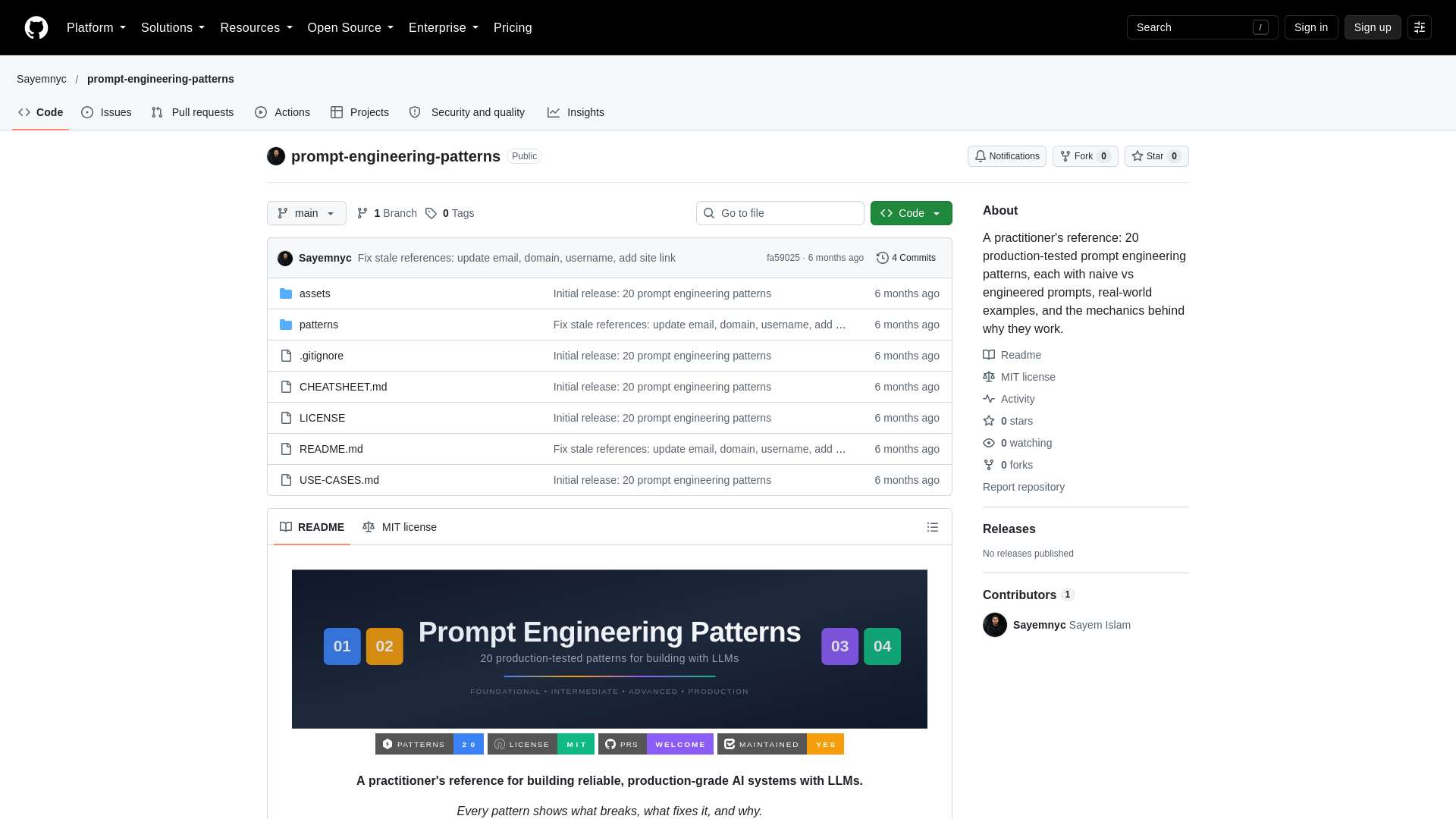
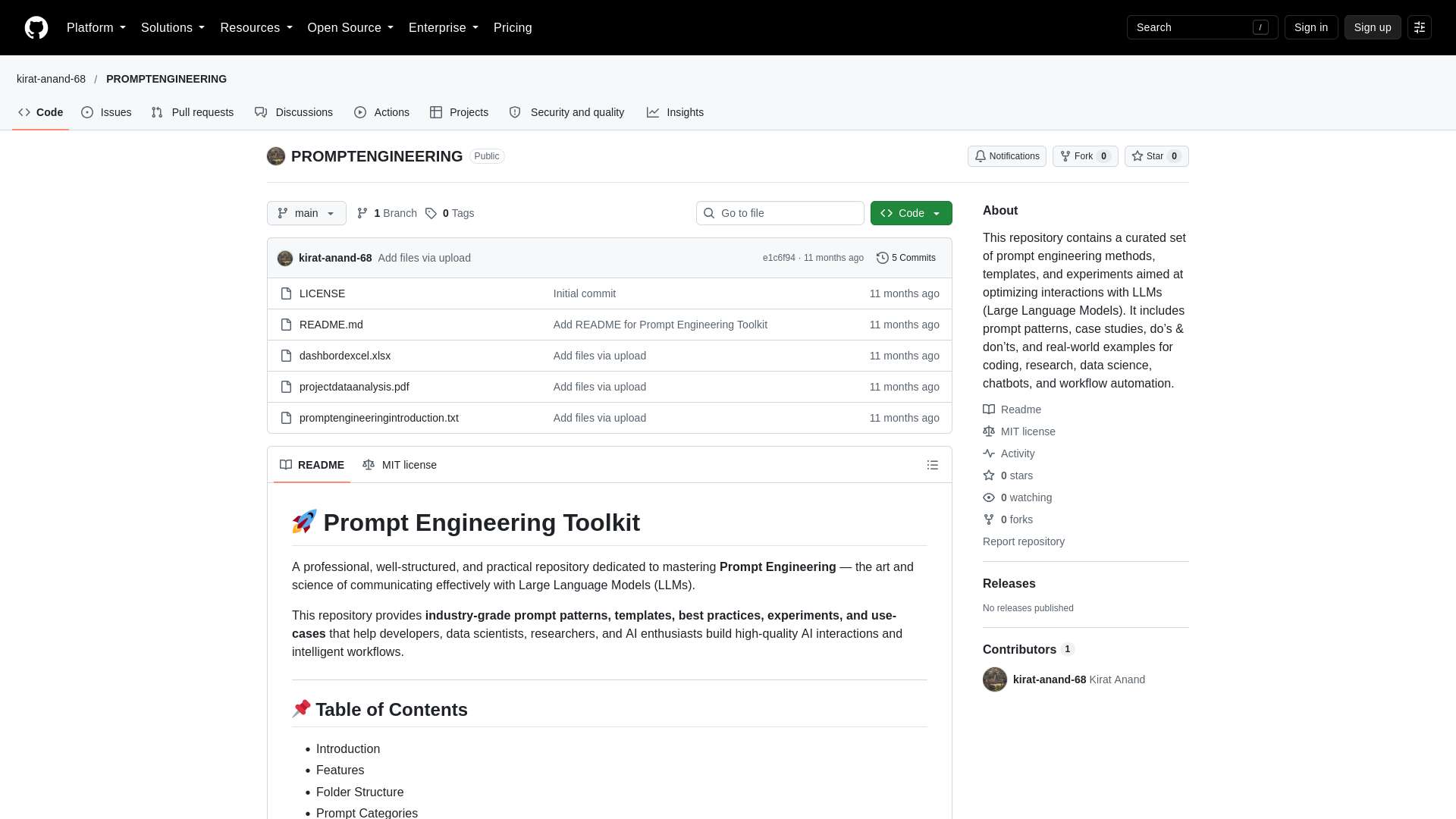
Source website screenshots
Frequently Asked Questions
Why shouldn't I ask the model to design an architecture and write the implementation code simultaneously?
Combining architectural research and implementation code in a single prompt degrades output quality. LLMs operate under a fixed attention budget per generation step. When forced to construct complex syntax and imports while simultaneously evaluating system trade-offs, they prioritize code completion over deep architectural evaluation. Separating design from implementation produces stronger results.
How do I stop coding agents from hallucinating outdated library APIs?
Explicitly inject the exact version numbers and key method signatures of your dependencies directly into the prompt context. If using agentic CLI tools, instruct the model to use file-search or documentation-reading tools before drafting code, or provide the relevant interface headers in the prompt's context block.
Can prompt engineering replace formal Architecture Decision Records (ADRs)?
No. Prompt engineering accelerates the research and draft phase of an ADR by rapidly stress-testing scenarios and synthesizing trade-offs. However, the final decision requires an engineer's operational accountability, knowledge of company infrastructure, and context on team competencies that models cannot access.
What is the most common mistake engineers make when prompting models for system design?
The most frequent mistake is omitting negative constraints. Without explicit instructions barring certain patterns (such as third-party services, distributed transactions, or unindexed queries), models consistently recommend over-engineered architectures that introduce unnecessary infrastructure and operational overhead.
Sources and image references
- Sayemnyc: Prompt Engineering Patterns Repository
- Kirat Anand: Curated Prompt Engineering Methods and Experiments
- ArXiv (2024–2026): Prompt Design and Engineering: Introduction and Advanced Methods (arXiv:2401.14423v4)
- MaxtDesign: Prompt Engineering for Code: Practical Patterns That Work
- AIMadeTools: Prompt Engineering for Coding Workflows and File Context
Keep reading
Related reading
⚡ AI Engineering Briefing
AI model releases, practical tutorials, developer tools, and engineering research. Unsubscribe anytime.
Comments
Comments are temporarily unavailable while the public discussion space is being configured.